News
FAO report examines the high cost of healthy diets and the path towards Zero Hunger
Agriculture & Food Security
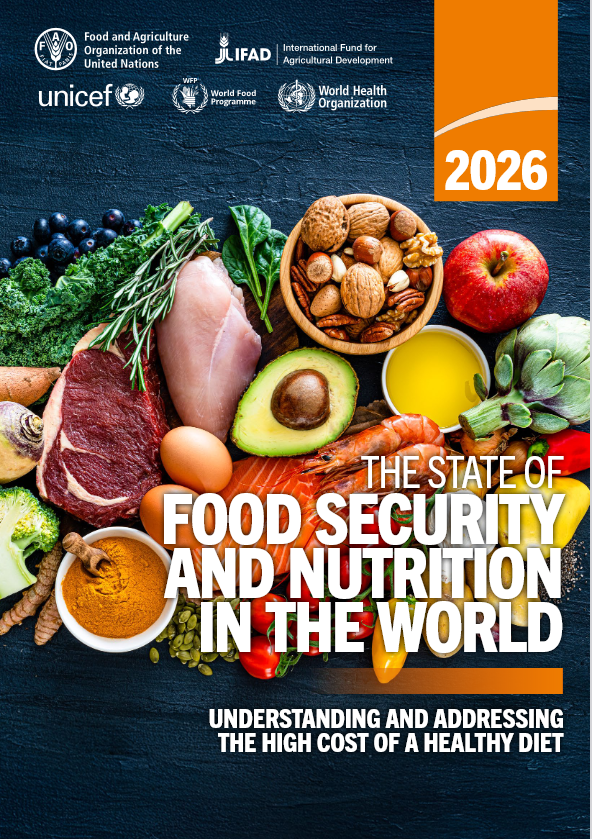
Despite gradual improvements in recent years, global hunger and food insecurity remain well above the targets set by the 2030 Agenda for Sustainable Development. The 2026 edition of the FAO-led report 'The State of Food Security and Nutrition in the World' examines one of the central challenges behind this persistent crisis: the high cost of accessing a healthy diet.
An estimated 645 million people faced hunger in 2025. At the same time, around 2.7 billion people worldwide cannot afford a healthy diet. The challenge is particularly acute in Africa, where the affordability gap continues to deepen.
The report highlights that the cost of a healthy diet is driven largely by the price of nutrient-dense foods. Animal-source foods, fruits and vegetables account for nearly 70 percent of the total cost of a healthy diet, making access to nutritious food particularly difficult for households with limited incomes.
Drawing on existing data and analytical tools, the report examines the structural factors that contribute to high food prices. These include geographical disparities, gaps in agricultural productivity and inefficiencies across food value chains, including food loss and waste. The report argues that tackling hunger and malnutrition requires more than increasing food production. To make healthy diets more affordable, governments and other stakeholders need to address the underlying factors that shape food costs and access.
Recommended actions include redirecting agricultural support towards nutrient-dense food production, investing in cold-chain infrastructure and improving transport networks. These measures can help reduce costs across food systems while improving access to safe, diverse and nutritious foods.
The report provides a framework for targeted, multisectoral action to lower the structural cost of healthy diets and advance progress towards Zero Hunger. It also highlights the importance of addressing the hidden costs of agrifood systems and protecting human capital through better nutrition.
Read the full report here.