News
New IAP Report Sets Global Priorities for Advancing Wildfire Modelling and Artificial Intelligence
Environment & Climate
The InterAcademy Partnership has released a new workshop report outlining global priorities for strengthening wildfire modelling and the application of artificial intelligence to improve preparedness, response and policy development.
The report captures the outcomes of an international workshop on Wildfire Modelling and Artificial Intelligence, held on 17–18 March 2025 in Madrid. The event was convened by IAP in collaboration with the Royal Spanish Academy of Sciences and supported by the U.S. National Academies of Sciences, Engineering and Medicine. It brought together 26 experts from ten countries including Australia, Chile, France, Italy, New Zealand, Portugal, Spain and the United States.
Authored by Dr. Hussam Mahmoud of Vanderbilt University, who served as workshop chair and rapporteur, the report distills key insights from presentations and discussions among leading researchers and practitioners. It highlights both the promise and current limitations of wildfire prediction models and identifies concrete opportunities for advancing international collaboration.
Participants assessed a broad spectrum of modelling approaches, each with distinct strengths.
Workshop participants emphasised that these approaches should not be seen as competing alternatives. Instead, they form a complementary toolkit that, when integrated effectively, can significantly strengthen wildfire preparedness and mitigation strategies.
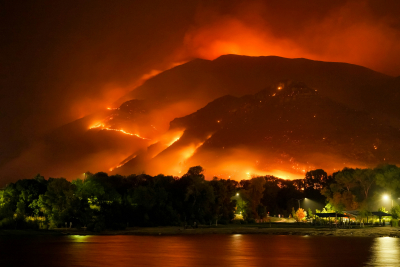
A central focus of the workshop was the impact of wildfires on the built environment, particularly in the wildland urban interface where communities are increasingly exposed to fire risk.
Participants stressed the importance of closing the gap between advanced fire simulations and their practical application in policy, land use planning and community protection. They also noted that the workshop did not systematically address model uncertainty and that not all presenters provided numerical information on model accuracy, highlighting areas for further work.
The report outlines several priority actions to advance the field. These include harmonising data and terminology across countries, improving interoperability between modelling platforms, integrating human behaviour into wildfire models, strengthening training and communication, and building a global repository of wildfire events. It also calls for enhanced multinational coordination to support model driven fire response.
As wildfire risks intensify under climate change, the report underscores the need for sustained international cooperation, targeted research investment and capacity building. By connecting technical modelling advances with operational needs and policy frameworks, the global community can better anticipate wildfire impacts and protect communities.
The full report, Wildfire Modelling and Artificial Intelligence: Workshop Summary, is now here.