News
From Presence to Power: Women Leading in Science
Other
Scientific academies and international scientific organizations play a critical role in shaping research agendas, recognizing excellence and advising policymakers. Who leads these institutions influences whose expertise is heard and whose perspectives shape science.
Yet women remain significantly underrepresented in leadership. The 2026 global report Towards Gender Equality in Scientific Organizations shows that only one in five science academies worldwide is currently led by a woman.
While women increasingly participate in scientific communities, presence does not automatically translate into influence. Leadership positions, decision-making roles and recognition still remain unevenly distributed.
The women featured in this series represent important exceptions to this pattern. They are scientists who have reached leadership positions despite persistent structural barriers. Their careers demonstrate how women’s leadership strengthens science, broadens perspectives and helps create more inclusive institutions.
Through the From Presence to Power campaign, IAP highlights women who are shaping scientific organizations, advancing research and mentoring future generations.
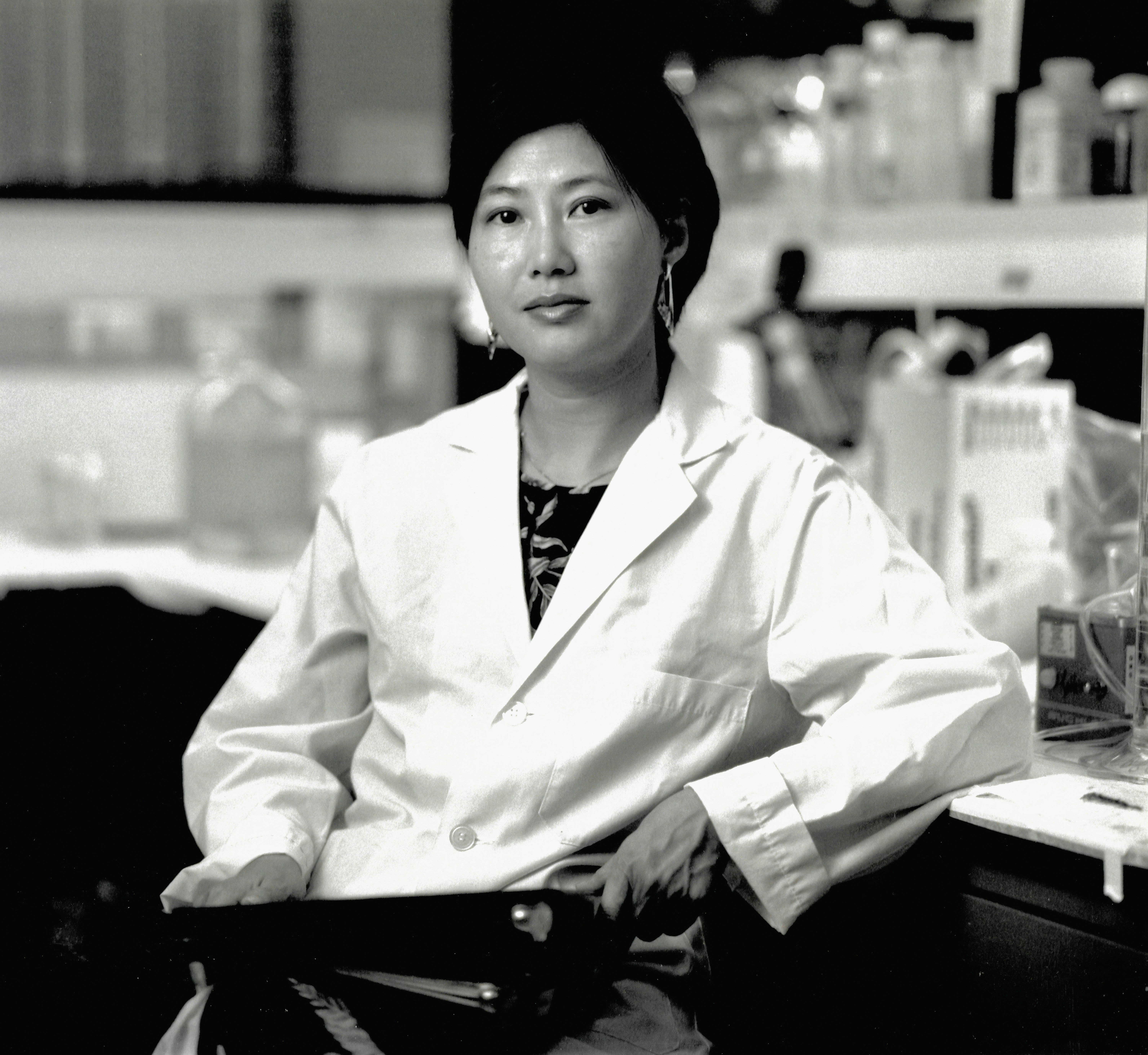
Distinguished Professor Dame Jane Harding is an internationally recognized neonatologist whose research on growth and development around birth has improved outcomes for mothers and babies worldwide. With over 35 years of experience in clinical medicine, research, and teaching, her work has contributed to new understanding and therapies in perinatal health. She has received New Zealand’s Rutherford Medal, the Prime Minister’s Science Prize, and awards from leading international pediatric and perinatal research societies. Dame Jane has held leadership roles including Deputy Vice-Chancellor for Research at the University of Auckland and has led international scientific collaborations, including the merger of the Australian and New Zealand Perinatal Societies. She now serves as President of Royal Society Te Apārangi.
Dr. Naheed is a medical doctor and public health researcher with 30 years of experience in infectious and noncommunicable diseases. She has led national programs in epidemiology, digital health and primary care strengthening, and has developed innovative interventions for hypertension, childhood NCDs, and mental health. Dr. Naheed has authored over 125 publications, supervised numerous PhD candidates and spearheaded initiatives for women in STEM, including the Women Scientists and Researchers Forum at icddr,b and The Global Health Network Asia. She is a Fellow of TWAS and the Bangladesh Academy of Sciences and has received international recognition for her contributions to public health.
Women and men are the two essential wings of a society must be made equally strong for optimizing economic growth and enhancing humanitarian missions. Inadequate participation of women in scientific missions prohibits achieving the highest-level scientific solutions and deserved benefits for those who need it the most. Promoting women in STEM is critically important for paving a smoother highway for building a highly resilient future generation of the world.
Prof. Gürsan is an expert in electrochemistry, biosensors, nanomaterials and biomedical applications. She has led multiple national and international research projects, developed innovative diagnostic technologies and authored over 220 publications with an h-index of 47. She has held key roles in the Turkish Academy of Sciences and international science policy committees, including UNESCO IBSP and AASSA-WISE, promoting STEM and research equity across Asia.
Diverse perspectives in science drive innovation. International collaboration broadens minds and fosters transformative solutions.
Prof. Separovic is a biophysical chemist specializing in molecular interactions in biological membranes. She was the first female chemistry professor at Melbourne and the first female chemist elected to the Australian Academy of Science. Her research on peptide antibiotics and toxins has had global impact, and she has served as president of multiple scientific societies. Prof. Separovic actively promotes diversity in STEM and international scientific collaboration.
For a more sustainable future, we need science and policy to be informed by diverse expertise and experiences.
Dr. Matias is a leader in industrial engineering, human factors, productivity and occupational safety. She has spearheaded quality assurance, engineering education reforms and safety systems across the Philippines and ASEAN. As a mentor, she has guided generations of women engineers and actively participates in AASSA-WISE to promote regional STEM equity. She received numerous national and international honors and was named one of the top 100 outstanding Engineers of the Center by the UP Alumni Engineers.
Science needs women not simply for balance, but for transformation—designing systems that are efficient, humane, and inclusive.
Prof. Karunaweera is a medical parasitologist specializing in tropical diseases, including malaria and leishmaniasis. She founded Sri Lanka’s first leishmaniasis research lab and has influenced national health policy through her research. She is a Fellow of TWAS, the American Academy of Arts and Sciences, and the American Society of Tropical Medicine and Hygiene, and is recognized among the world’s top 2% of scientists. She has mentored multiple generations of women scientists and established the Sri Lanka National Chapter of OWSD.
Keep your eyes locked on the goal—don’t let anything or anyone pull you off your path.
Prof. Tantayanon is a pioneer in green chemistry, small-scale chemistry, and sustainable laboratory practices. She has developed innovative teaching tools, led international workshops, and contributed to IUPAC guidelines and global STEM initiatives. Her leadership in chemical safety, education, and AASSA-WISE promotes women’s participation in science and responsible scientific practices.
Women often see possibilities others miss. When women step into science, they reshape it and open new paths for generations to follow.
Dr Tista Prasai Joshi is a senior scientist specializing in water resources and environmental sustainability. Her research contributes to improving understanding of water systems and environmental challenges, earning international recognition including the TWAS Award (2024), the OWSD–Elsevier Foundation Award, and the OWSD Early Career Fellowship (2019). Beyond research, she promotes women’s participation in science as Chair of the OWSD Nepal Chapter and represents the Asia-Pacific region in the global Organization for Women in Science for the Developing World (OWSD), advocating for mentoring and stronger support for women researchers.
Women scientists act as essential catalysts for transformation, connecting the gender gap in STEM (Science, Technology, Engineering, and Mathematics) by acting as a visible role model, which ignites interest in younger generations.
Dr Luisa Maria Diele-Viegas is a Brazilian ecologist studying biodiversity in the Anthropocene and the impacts of human activities on natural and human systems. She coordinates the Laboratory of Biodiversity in the Anthropocene (BioDivA) and develops transdisciplinary approaches integrating ecology, ethnobiology, and environmental governance. Dr Diele-Viegas serves as President of the Brazilian Association for Ecological Science and Conservation (ABECO) and as President of the Brazilian OWSD chapter and Latin America regional representative. She is also a member of the Global Young Academy, a Young Affiliate of TWAS, and serves on the executive committee of the European Society for Evolutionary Biology.
Solutions to societal challenges grow stronger when women, diverse voices and multiple knowledge systems shape how science is produced and applied, making scientific leadership stronger and more relevant.
Dr María Esther Quintana Cáceda is a Peruvian chemist and materials scientist specializing in nanomaterials and graphene for photovoltaic and environmental applications. She serves as Director of the Department of Physical Engineering at the National University of Engineering in Lima and as Technical Manager of NanoInventa, linking research, innovation and real-world deployment.
She has held postdoctoral research positions at Uppsala University and KTH Royal Institute of Technology in Sweden and previously led the Environmental Engineering program at Cayetano Heredia University. She is also a member of the Executive Board of the Organization for Women in Science for the Developing World for Latin America and the Caribbean and a former Industrial Development Area Manager for CYTED, supporting inclusive scientific leadership across the region.
Women’s presence in science becomes power when it comes with authority: budgets, teams, labs, and seats where decisions are made. When women lead, science moves closer to society—turning knowledge into solutions, opening pathways for the next generation, and reshaping what ‘excellence’ looks like. #FromPresenceToPower means building institutions where women don’t just participate—they set the agenda.
Dr Lobna A. Said is an Associate Professor of Electronics and Electrical Communication Engineering at Nile University and Director of the Microelectronics System Design Program. Her research focuses on intelligent sensing systems, hardware accelerators and secure data-driven technologies for applications in sustainable infrastructure and smart environments.
She has authored more than 225 scientific publications and serves on the editorial boards of several international journals. Dr Said is a Fulbright fellow, a TWAS Young Affiliate and an Affiliate Member of the African Academy of Sciences. She previously served as Co-President of the Arab-German Young Academy of Sciences and Humanities and currently represents the Arab region on the Executive Board of the Organization for Women in Science for the Developing World.
Determination is what turns presence into power. When women in science persist with purpose, they create the paths that others will follow.
Prof. Mervat Foda is a dairy science researcher at the National Research Centre in Egypt whose work focuses on food science and technology. She has published more than 50 research papers and a book chapter, and holds three patents designed to support children with special needs and older adults. She has also supervised master’s and PhD students from Egypt and Sudan.
Alongside her research, Prof. Foda holds several leadership roles promoting women in science. She serves as Vice President of the Organization for Women in Science for the Developing World for the Arab region, Chair of the OWSD Egypt National Chapter, and President of the Society for Women in Science in Developing Countries in Egypt. She is also President of the Swedish–South Asian Network for Fermented Foods national chapter in Egypt and has previously led the National Committee for Women in Science at Egypt’s Ministry of Higher Education and Scientific Research.
I believe that when a woman in science leads, she transcends the act of breaking barriers and proving herself only. With mastery and grace, she conveys knowledge in a manner both rigorous and wise—clear, persuasive, and inspiring, which lead to doing innovative, transparent, and enduring future.
Prof. Evelyn Umemezia is a Professor of Human Resource Management with an academic background in the sciences and more than 30 years of experience in human resource management, business and management, gender studies, and organizational behaviour. Her work focuses on bridging education and industry through vocational education, workforce development, and career guidance to strengthen employability and entrepreneurship.
She serves as the African Regional Member of the Executive Board of the Organization for Women in Science for the Developing World (OWSD). She has also contributed to international policy discussions, including serving on the planning committee of the InterAcademy Partnership (IAP) International Workshop on Sexual Harassment in Academia (Paris, 2025). As Principal Investigator of an African-Uninet funded multicountry research project (2024–2026), she leads research on campus sexual harassment in Nigerian private universities, developing evidence-based interventions and policies to promote safer and more equitable academic environments.
When women equally participate in science and leadership, institutions move beyond tradition toward transformation.
The stories featured here demonstrate the impact women can have when they reach positions of leadership in science. Yet the findings of the global report on gender equality in scientific organizations show that much work remains to be done.
Moving from presence to power requires continued efforts to remove barriers to leadership, expand opportunities for women in decision-making roles and ensure that scientific institutions reflect the diversity of the communities they serve.